Gochugaru vs Gochujang: What Is the Difference?
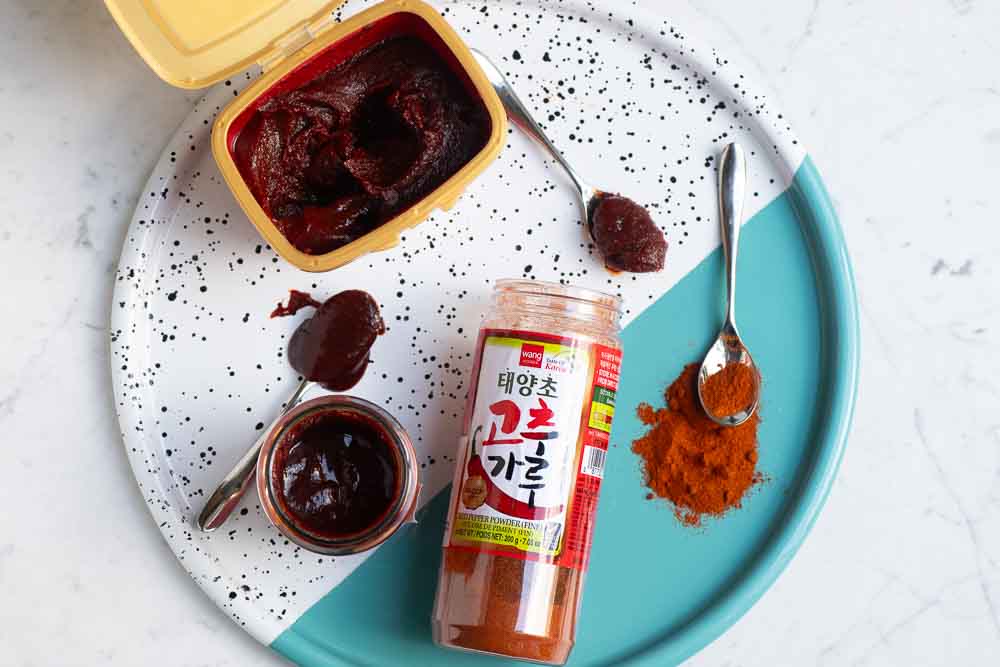
If you are exploring Korean cooking, one of the most common questions is gochugaru vs gochujang. Both ingredients come from Korean chili peppers and are essential in many Korean dishes, but they are very different in texture, flavor, and usage.
Many beginners assume they are interchangeable because both are red, spicy, and used in Korean recipes. In reality, each ingredient serves a different purpose in cooking.
What Is Gochugaru?
Gochugaru is Korean red pepper that has been dried and ground into flakes or powder. It is made from sun-dried chili peppers with seeds mostly removed, creating a bright red ingredient with mild to medium heat.
Gochugaru is available in two common forms:
- coarse flakes
- fine powder
It is often used when texture and dry spice are needed.
What Is Gochujang?
Gochujang is a thick Korean chili paste made by mixing:
- chili powder
- fermented soybeans
- glutinous rice
- salt
Because it is fermented, gochujang has a deeper, richer flavor with sweetness and umami.
Its texture is thick and sticky, similar to a concentrated sauce.
Main Difference Between Gochugaru and Gochujang
The biggest difference is texture and composition:
Gochugaru
- dry ingredient
- flakes or powder
- pure chili flavor
- mild smoky heat
Gochujang
- wet paste
- fermented ingredient
- sweet, savory, spicy flavor
- thicker consistency
Flavor Comparison
Gochugaru Flavor
Gochugaru gives:
- clean chili taste
- mild sweetness
- fresh pepper aroma
- lighter heat
Gochujang Flavor
Gochujang gives:
- fermented depth
- sweet heat
- salty umami
- heavier richness
This is why recipes often use both together rather than replacing one with the other.
When to Use Gochugaru
Gochugaru works best for:
- kimchi
- dry seasoning
- marinades
- soups
- spice blends
It adds color and pepper heat without thickening the dish.
When to Use Gochujang
Gochujang works best for:
- sauces
- stews
- bibimbap
- marinades
- dipping sauces
Because it contains fermentation, it adds body and complexity.
Can You Substitute One for the Other?
They are not ideal direct substitutes.
If using gochugaru instead of gochujang:
You lose:
- sweetness
- fermentation
- thick texture
If using gochujang instead of gochugaru:
You add:
- moisture
- salt
- sugar
This can change the recipe significantly.
Which One Is Spicier?
Gochugaru often gives cleaner heat, while gochujang feels milder because sweetness balances spice.
Actual spice level depends on brand and pepper variety.
Why Korean Recipes Use Both
Many traditional recipes combine both because:
- gochugaru gives color and fresh chili flavor
- gochujang adds body and fermented richness
Together they create balanced Korean flavor.
Final Thoughts
Understanding gochugaru vs gochujang helps improve Korean cooking because both ingredients play different roles. One is a dry chili ingredient, while the other is a fermented chili paste.
If you want authentic flavor, keeping both in your kitchen gives much better cooking flexibility